
Food Of Ladakh
Leh Ladakh is one of the places that are on everyone’s road trip bucket list. A majority of people think Ladakhi cuisine is everything about momos and also noodle soups, but in reality, it is so much more. A lot of people see Ladakh for its cuisine. There is a lot of unique as well as interesting food of Ladakh.
Popular Food Of Ladakh
Ladakh’s cuisine is a combination of Tibetan, Chinese, and Continental and Korean dishes. Let us review the food of Ladakh and the list of delicious that you should to never ever miss in Ladakh.
MOMOS
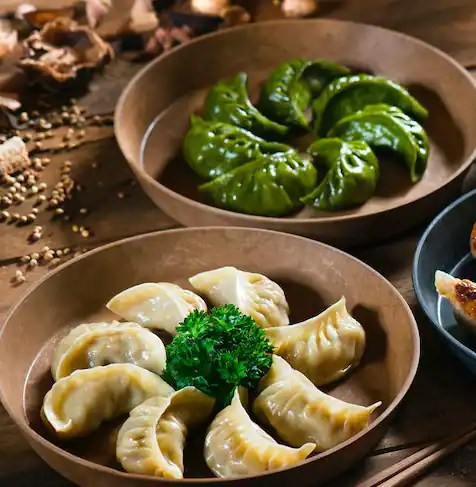
Momos, without a doubt, is the most popular dish in Ladakh. It is a dumpling filled with meat or vegetable wrapped in dough. While momos stuffed with minced meat enjoys popularity among locals, veg momos are also savoured alike. These dumplings are either steamed or fried and served with dipping sauce. Momos are served to guests on special occasions such as Losar Festival(Ladakhi New Year). Momos are steamed in a container called Mokto which has several compartments with holes in them and placed on top of each other. Water is boiled in the bottom-most container and the steam is used to cook momos. These dumplings come in different beautiful shapes, especially round pleated and half-moon.
There is also the kothay momos that are pan-fried and given a slight red colour. Another variant of momo is the taipo, which is rare, but not completely unheard of. It is a large momo with loads of meat and veggie filling. At times, one may also find half an egg inside it. Try your luck here at Leh, and take a look at the types of momos you can eat.
THUKPA

Thukpa is the staple food of people of Ladakh. It is a soupy noodle dish with assorted vegetables (for vegetarians) and minced meat (for non-vegetarians). The noodle is made of wheat or barley flour. The broth, rich in spices, not only satiates the taste buds but also warms the body. There are different types of thukpa (known as thentuk, pakthuk, etc.) served in different parts of Ladakh. Thukpa is not only popular with locals but also with visitors. It is available in all the restaurants of Leh at a very affordable price.
Thukpa is also very nutritious due to its vegetable and meat content, and is a wholesome meal in itself. Of course there are various types of spicy add-ons to the thukpa which make it tastier and all the more enticing. When in Leh, experiencing the Thukpa is a must. Again, this is another dish that you will find in most restaurant here. There is also a variant of it, known as dry thukpa; it is sans the soup and is equally tasty. But we think that the romantic Leh weather demands the warmth of thukpa soup, so do the right thing here!
SKYU

Skyu is another traditional soup-based Ladakhi speciality. It is a stew made with barley or wheat dough kneaded into thumb-sized flatten balls. It is slowly cooked in a pot with water, meat and root vegetables such as potatoes, turnips and carrots. This mouth-watering dish is often prepared in villages and its recipe has remained unchanged for centuries. This heavy and high-calorie food containing energy in the form of carbohydrates is a favourite during the cold winter months when the temperature in ladakh falls to below freezing and for those doing trekking. In villages, it is also habitual to include fresh milk as a main ingredient. In that case, the dish is called oma-skyu, “oma” means “milk” in ladakhi language. A particularly tasty variant that you must try if you have the opportunity.
Skyu is also served with meat. The dish is high on calories and fills the stomach. Skyu is mostly consumed in winter when temperature drops below freezing point. It is also a favourite among tourists who do trekking and stay in villages.
TINGMO

Tingmo or Timok in Ladakhi is a steamed Tibetan bread that is eaten with dal, cooked vegetables or meat. It is staple food for the people of Ladakh, similar to white bread or “baguette” in French cuisine. Tingmo is a soft and fluffy plain bun made from white flour and it does not contain any filling. It is best when served hot (after having been steamed for around 15 minutes) and it goes very well with stews. Tingmo is very similar to the Chinese “Hua Juan” (also known as Flower Bun or Mandarin Rolls). Tingmo is served for breakfast, lunch and dinner. It is a favoured tea-time snack too.
Tibetan steam bread, extremely delicate and soft, Tingmo is something you must try when in Leh. Tingmos are authentic Tibetan breads and can be also termed as ‘buns.’ Basically, you take a momo and remove the filling and double up on the fluff, and there you have your warm tingmos.
CHUTAGI

Chutagi is a famous pasta-like dish with a rich vegetable-based sauce. This is one of Ladakh’s signature dishes and every local restaurant in Leh has its own secret Chutagi recipe. “Chu” means “water” in Ladakhi and “tagi” means “bread”. Therefore, the literal translation of “Chutagi” is “water-bread”. Chutagi is a delicacy consisting of bow-tie-shaped pieces of dough cooked in a thick soup made of potatoes, carrots, peas, and local leafy green vegetables (similar to spinach). A non-veg version of this dish with meat is also very common. A delicious Ladakhi culinary speciality which is very nutritious too!
Chhutagi is a heavy meal and is often served during harvest season to workers to give them energy. Some local restaurants in Leh have come up with different versions of chhutagi. It is definitely one of the culinary specialities of Ladakh that need to be tasted.
CHHURPI

Yak cheese, “Chhurpi” in Ladakhi, is made from the milk of the domesticated yak called “dzomo”. A dzomo is actually a hybrid between a yak and a cow. The female of this crossbreed produces nearly three times as much milk as a female yak. Chhurpi is white in colour and the taste is mild, similar to Italian ricotta. There are two varieties of Chhurpi: soft and hard. Due to a scarcity of vegetables and fruits in Ladakh, this traditional cheese is widely consumed. It is an essential ingredient of the local people’s diet because it is a main source of vitamins and proteins. Chhurpi is found with all kind of food in Ladakh such as thukpa and it is used as a filling for momos.
So reach out to it and pop it in your mouth, you have a softer churpi that could be finished without effort. This is a must-try and must buy for friends and family.
CHHANG

Chhang is Ladakh’s local beer and is served as a traditional drink to the guests. Barley is fermented to produce chhang which has an alcohol content of 5% to 7%. Chhang is consumed during festivals, weddings and other important functions. When making a marriage proposition, a pot of chhang is offered to the girl’s family. If the pot of chhang is accepted, then it means that the girl’s family is ready for nuptial knots. Chhang is served to guests with a small piece of butter on the brim of cups as a sign of respect. A finger is dipped and a few drops of chhang is flicked in the air three times as an offering to the Buddha, Dharma and Sangha before drinking.
The beverage was analysed for alcohol content, pH and titrable acidity using standard analytical methods. Results showed that the fermented beverage contains 5-7% alcohol, pH 3.6 to 3.8, acidity 0.55 to 0.65%.
BUTTER TEA

No occasion in Ladakh could be complete without butter tea. It is served during weddings, festivals and all important occasions of Ladakh. People of Ladakh drink it all day as it not only provides warmth but also keeps the body hydrated in a cold, high-altitude area. Known as gur-gur chai, the tea is prepared with butter, milk and salt that are added and churned until thoroughly mixed with boiled tea leaves. Tsampa is often added to butter tea to prepare kholak.
It is the perfect answer for fighting against the bitter cold of the high Himalayas, and could prove to be therapeutic. In fact the butter helps your lips from getting chapped in the cold and dry weather. On a usual cold day, wrap yourself in a blanket and sit with a cup of Tibetan butter tea, you will realise you do not need anything else in the world. The word around Ladakh is that the best butter tea is found at the Hemis Gompa (monastery), so take a hike to taste (possibly) the best Tibetan salted tea you will ever have.
KHAMBIR

Khambir is a delicious traditional leavened wheat-based bread. The handmade round-shaped fermented dough is baked over a hot stone and then directly in the fire. The bread is even better to eat when it’s freshly baked and still warm. Typically, Ladakhi people eat Khambir with scramble eggs or vegetables for breakfast. The bread is also served as a snack with butter tea. Khambir can be stored at room temperature for more than a week, it is a popular staple food in Ladakh.
Often known as tagi (bread), khambir is a local whole wheat brown bread with a thick crust. The round-shaped fermented bread tastes best when it is served freshly baked. Khambir is served for breakfast with butter tea. People also eat it with vegetables or eggs. Khambir could be eaten even after a week’s time and is one of the popular staple food in Ladakh.
APRICOT JAM

What about ending this list on a sweet note?
Apricot (or “chulli” in Ladakhi language) is the most popular locally-grown fruit in the region. Apricot culture was introduced in Ladakh in the early 20th century from China and Central Asia. Beautiful apricot orchards can be found in different parts of Ladakh located at lower altitude such as Sham (west part of the Indus valley), Nubra valley and Dha-Hanu valley. Several products are made from this fruit. Apricot jam is a delicacy that you will surely enjoy for breakfast! Apricots are also used to make syrup and the seeds are used to make kernel oil. Dried apricots are a favourite among Ladakhi people.
Even though there are different flavours of jams readily available in all the stores, nothing could beat the taste of apricot jam. Made from chulli (“apricot” in Ladakhi), which is the most popular fruit grown in the region, the jam has become popular among visitors in Ladakh. One could have an apricot jam with khambir or bread.
 FOODIE 69